Shodō, the Way of Writing
This cycle was created with the aim of introducing Shodō, the Way of Writing through practical, theoretical and exhibition-based approaches, along with the presentation and official opening of the Gen Mu Shodō Dōjō, which will be based at Musubu.
A Dōjō (道場) is not simply a school or a gym; it is, literally, the “place where the Way is followed”. A sacred space for personal transformation.
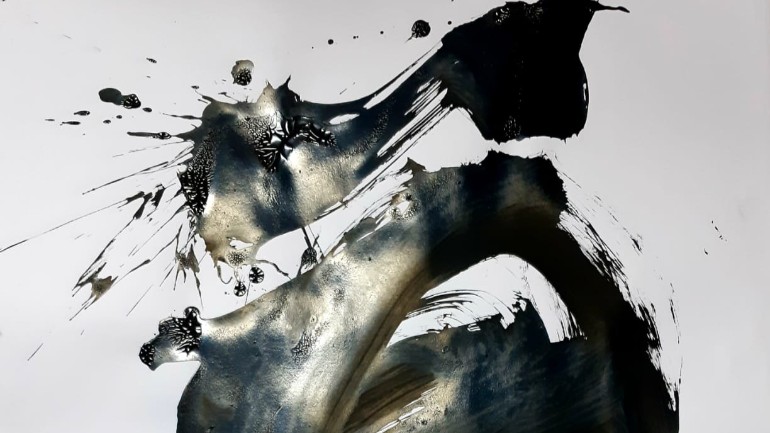
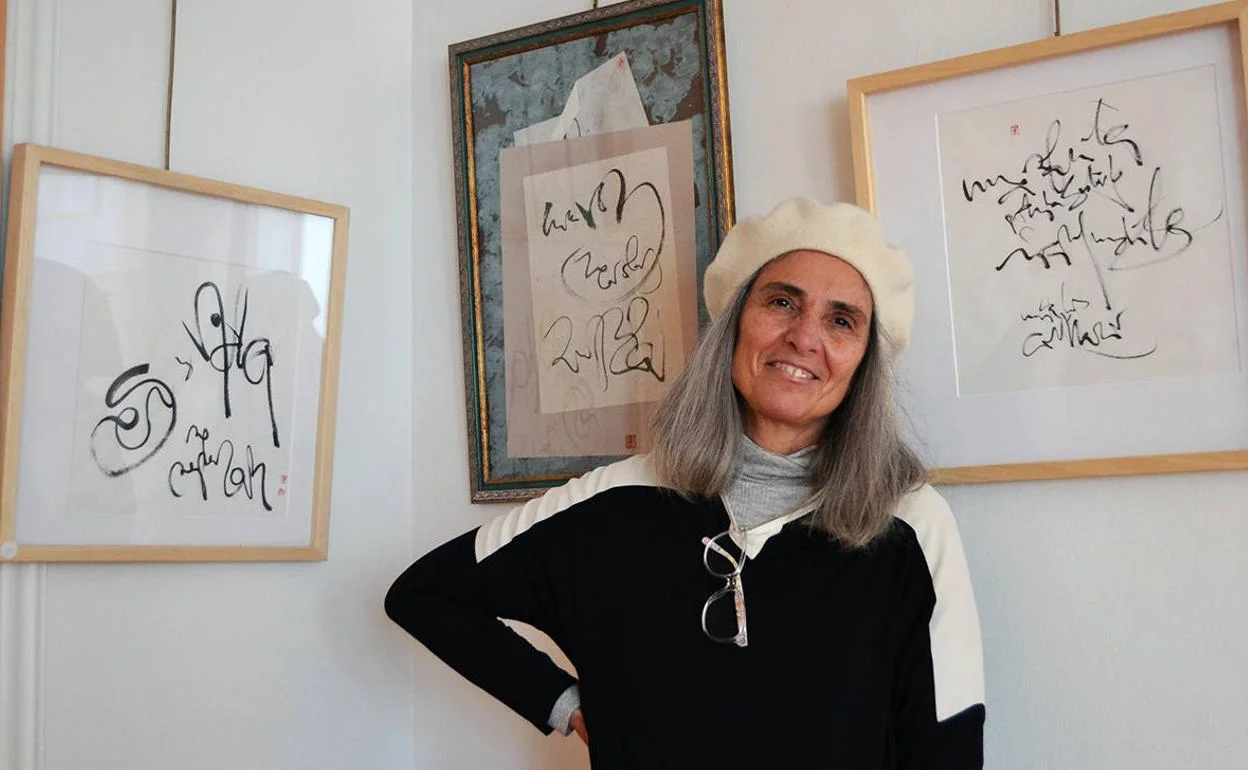
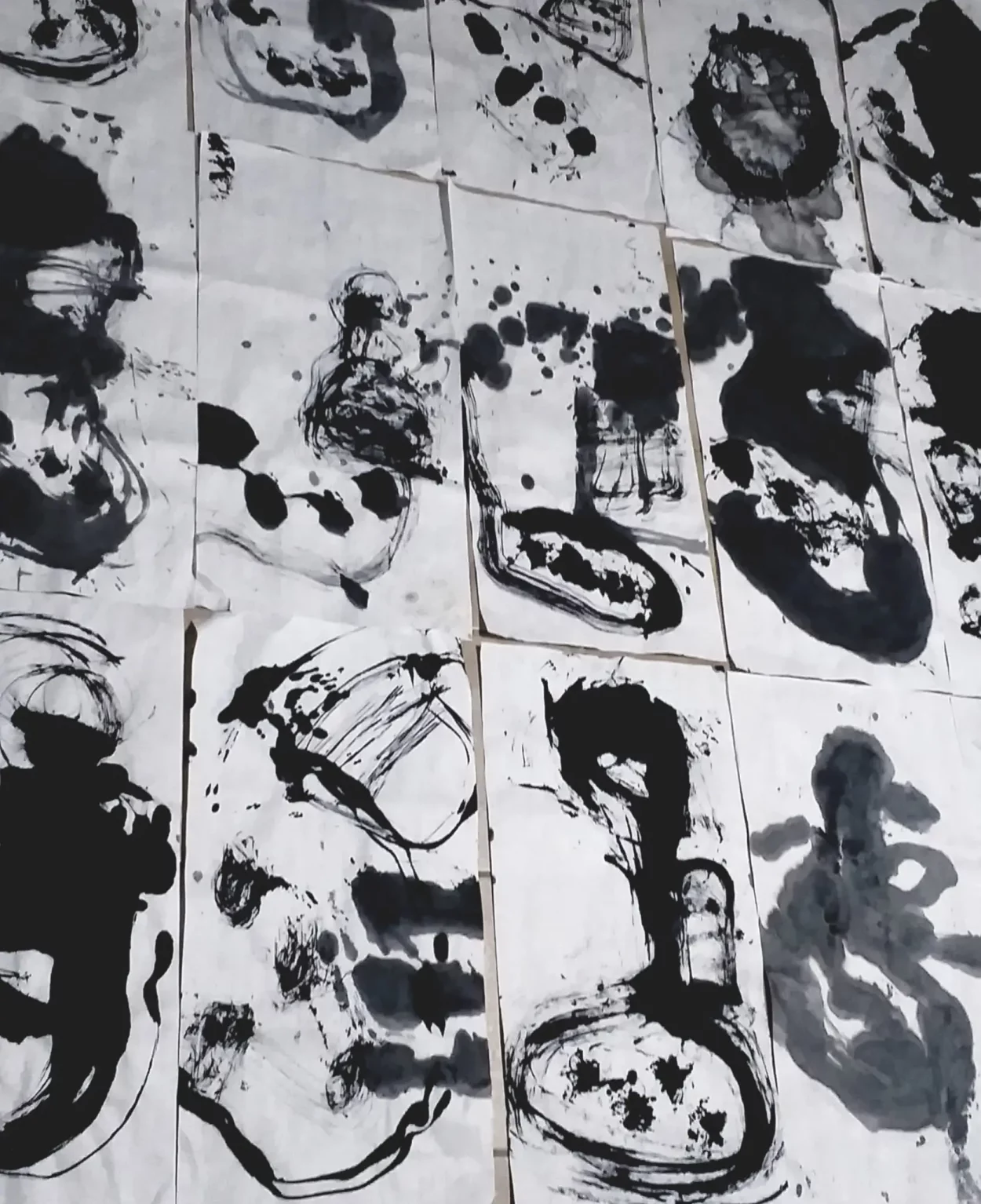
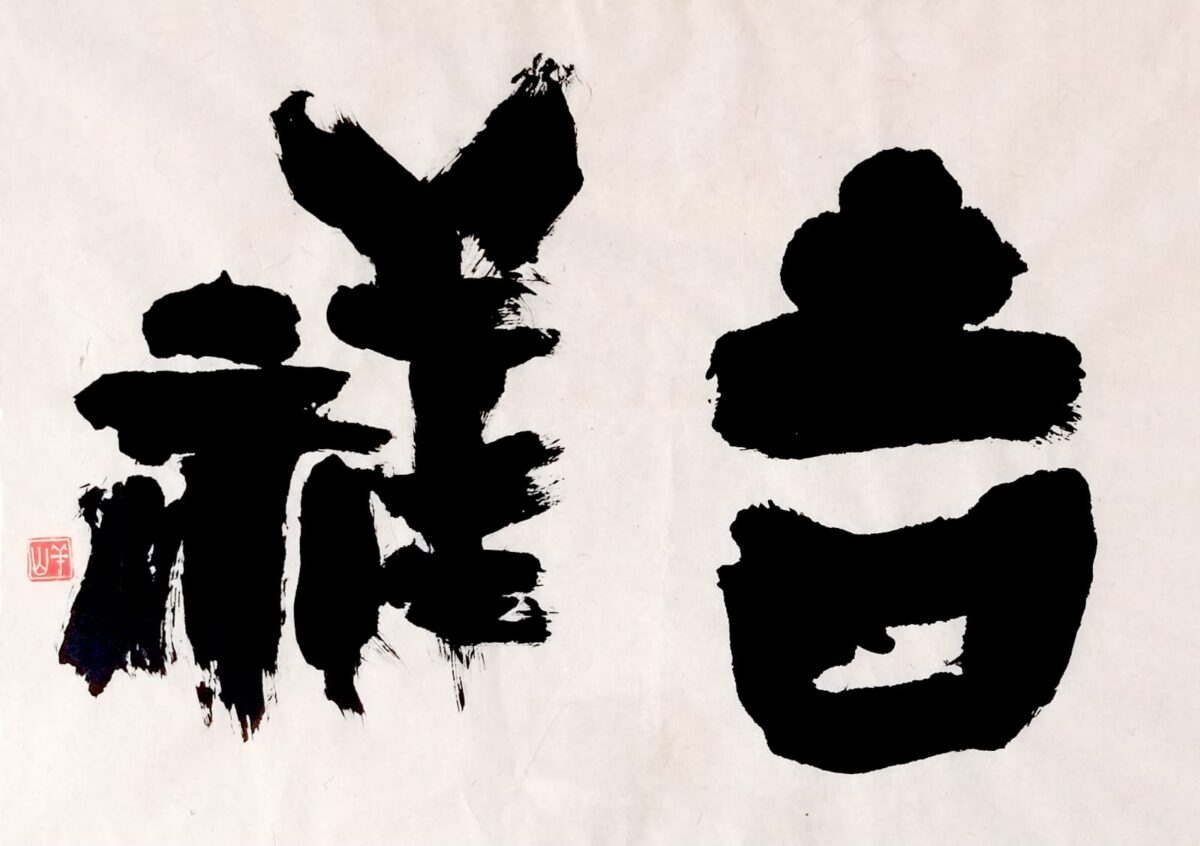
In this case, a space dedicated to Shodō, led by Eva Ibáñez Cano, representative of the Bokushin school in Barcelona, and its founder and grand master Norio Nagayama. Shodō is an ancient artistic and spiritual discipline that integrates gesture, breathing, attention and presence, and offers a profound path of connection between body and mind. Through the brushstroke, Shodō makes the inner state visible and invites a mindful practice that goes beyond the formal result to focus on the process.
Gen Mu Shodō Dōjō is born at Musubu, with the purpose of welcoming everyone interested in the Way of Writing. Thanks to the support of the great calligrapher and master Norio Nagayama, we are launching the Dōjō to follow his teachings and become part of his own school, Bokushin.
The Dōjō is conceived as a space for ongoing work, with monthly meetings to practise Shodō both as a discipline and as a sustained practice over time.
The aim is to bring Shodō and Japanese culture closer to Catalonia, creating spaces for meeting and learning that are open to people with or without previous experience.
Building on this foundation, Gen Mu Shodō Dōjō presents its first cycle of activities, in collaboration with the Fundació Felícia Fuster and Espai Cultural Musubu, the Dōjō’s home, and with the participation of artists and masters linked to this discipline.
One of the distinctive features of Felícia Fuster is her convergence with Japanese culture during the 1980s and 1990s. Her work, both artistic and poetic, underwent a profound transformation as it engaged in dialogue with Eastern cultural systems and thought, creating a language of her own in which emptiness, gesture and essentiality converse with the Western avant-garde.
Musubu Espai Cultural is an independent cultural space located in the Sants neighbourhood of Barcelona, dedicated to artistic creation, education and community gathering. The project was born with the intention of creating a close-knit environment where artists, local residents and people interested in culture can share knowledge, experiences and creative processes in an open and inclusive atmosphere. The name Musubu, which in Japanese means “to unite”, “to connect” or “to create bonds”, reflects the space’s philosophy: building bridges between artistic disciplines, cultural traditions and contemporary practices.
Today, Musubu hosts the Gen Mu Shodō Dōjō and becomes its official home.
GEN MU SHODŌ DŌJŌ OPENING
April 9 at 7 pm, at Musubu
Presentation and opening of the Gen Mu Shodō Dōjō, lineage of master Norio Nagayama and his Bokushin school, led by Eva Ibáñez Cano and master Nagayama (virtual attendance).
We will explain the origin and meaning of the name, as well as what a Dōjō means as a space for learning and deepening a discipline, where body and mind meet.
The first cycle of activities linked to the Dōjō will also be presented by Miguel Rivas, director of Espai Cultural Musubu in Barcelona, and Esther Rodríguez Biosca, director of the Fundació Felícia Fuster, also in Barcelona.
We’ll celebrate with a glass of cava.
PROGRAMME FOR THE 1ST CYCLE OF ACTIVITIES
Pre-registration for the activities via this link.
April 9 · 7 pm · Musubu
Opening of the Gen Mu Shodō Dōjō and connection with master Norio Nagayama
With Esther Rodríguez Biosca, director of the Fundació Felícia Fuster; Miguel Rivas, director of Espai Cultural Musubu; and Eva Ibáñez Cano, curator of the cycle, artist and a leading figure of the Gen Mu Shodō Dōjō.
April 14 · 7 pm · Musubu
Presentation of ACASHODO (Catalan Association of Japanese Calligraphy)
Exhibition Shodō Catalonia Japan
Performance El Traç Brut by Gerardo D. Cristante
April 16 · 6 pm · Fundació Felícia Fuster
Opening of the first cycle of Shodō activities
Talk “Norio Nagayama and contemporary Shodō”, by Joshu M. Clarà
April 17 · 7 pm · Musubu
Talk on “Kodai Moji” and demonstration by Maria Eugenia Manrique
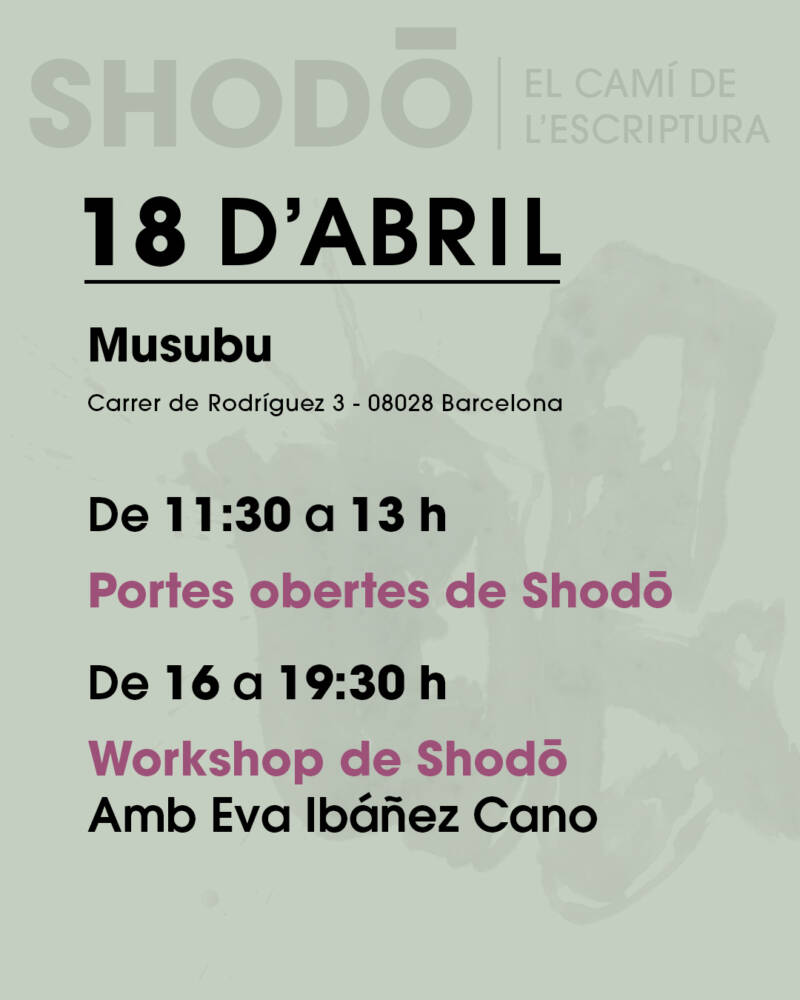
April 18 · Musubu
11:30 am to 1 pm
Shodō open day
4 pm to 7:30 pm
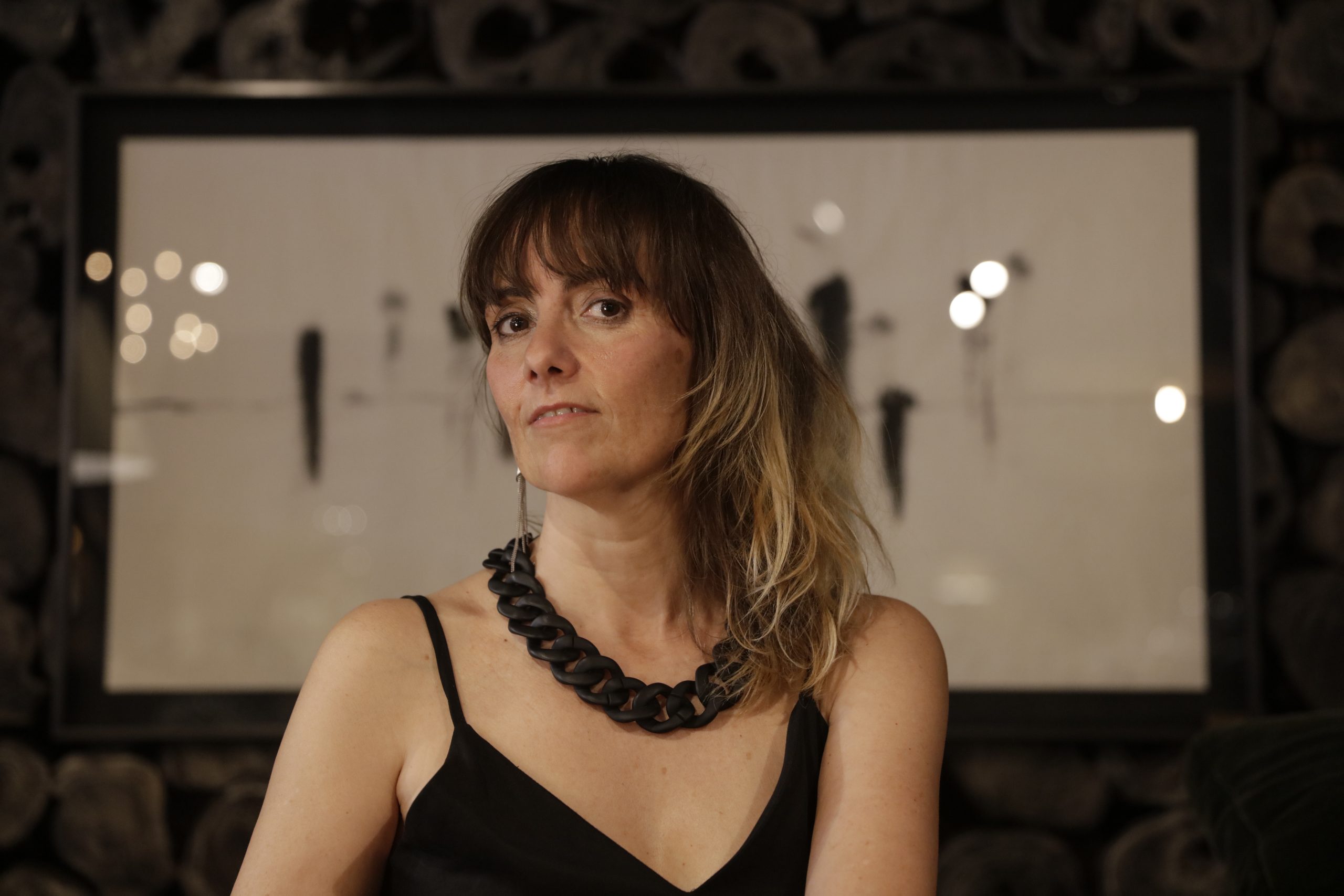
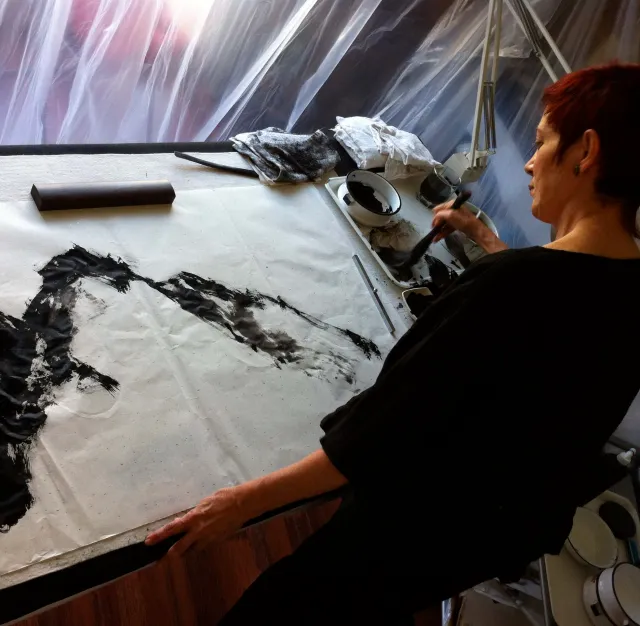
Shodō workshop with Eva Ibáñez Cano
April 22 · 7 pm · Musubu
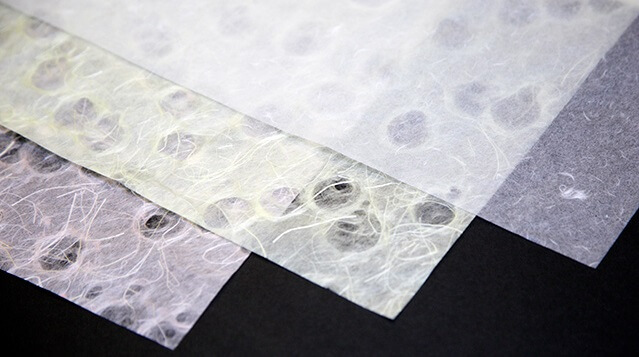
Talk Inshu Washi: the Japanese handmade paper Inshu Washi from Aoya
and Sho Do Ki Zen action, both by Joshu M. Clarà
April 24 · 7 pm · Musubu
Presentation of the book Delirios del Trazo en el Arte de la Ruta de la Seda,
by Paloma Fadón, with the author
April 30 · 6 pm · Fundació Felícia Fuster
Talk on Felícia Fuster’s poetry collection Postales no escritas with Esther Rodríguez Biosca
and a kanji writing demonstration by Eva Ibáñez Cano
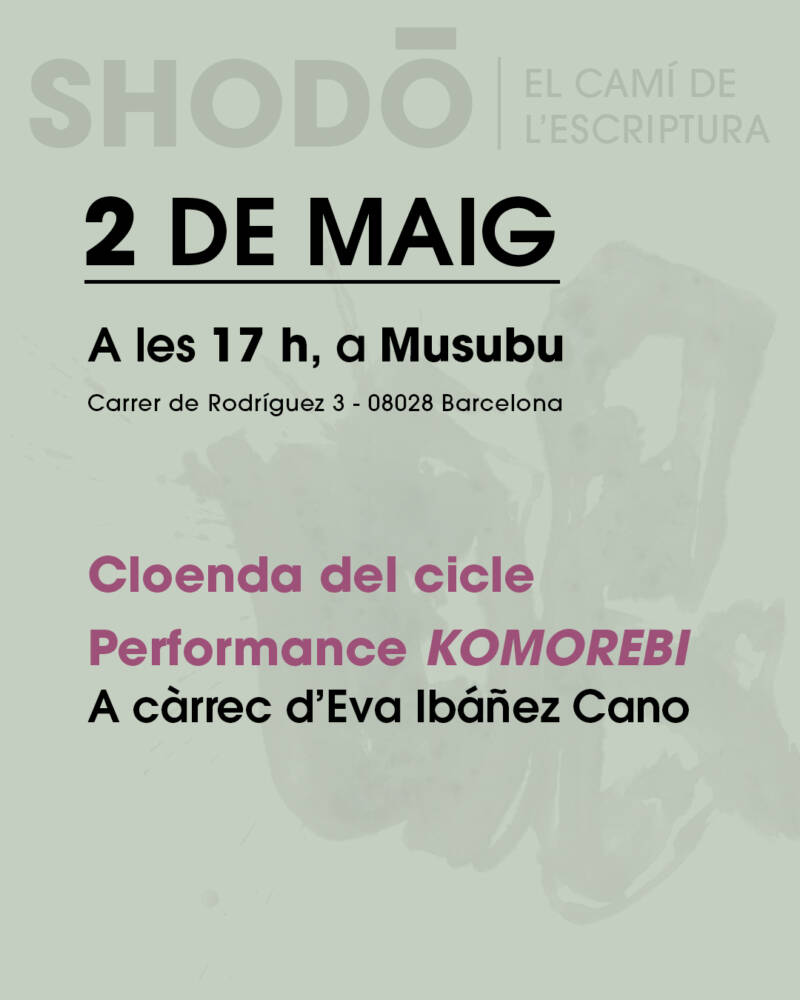
May 2 · 5 pm · Musubu
Closing of the cycle
Shodō performance (Komorebi) by Eva Ibáñez Cano
REGISTRATION FOR THE CYCLE ACTIVITIES
All activities (except the workshop) are free with prior registration.
Places are limited.
 PERFORMANCE
Closing event for the series and Komorebi performance, with Eva Ibáñez Cano
 CONFERENCIA
Presentation of “Delirios del Trazo en el Arte de la Ruta de la Seda” by Paloma Fadón
 CONFERENCIA
Inshu Washi Talk and Sho Do Ki Zen Action with Joshu M. Clarà
 TALLER
Shodō Workshop with Eva Ibáñez Cano
 TALLER
Open Workshop Shodō with Eva Ibáñez Cano
 CONFERENCIA
Kodai Moji Conference and Demonstration with Maria Eugenia Manrique
 CONFERENCIA
ACASHODO Presentation, Shodō Catalonia Japan exhibition and performance
 SHODO
SHODO