
Tsukemono: The Japanese Art of Preserving Flavor and the Passage of Time
Tsukemono speak of time, transformation, and respect for food. At Musubu, the kitchen is a place to share cultures, learn by doing, and build community.
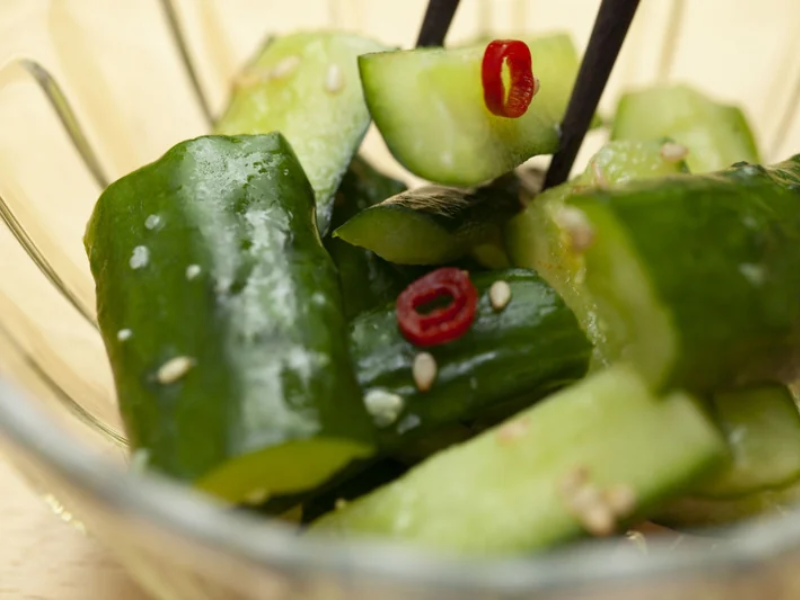
Tsukemono speak to us of time, transformation, and respect for food. At Musubu, we love exploring these culinary traditions because we believe the kitchen is also a place to share cultures, learn by doing, and build community.
In Japanese gastronomy, seemingly simple gestures embody an entire philosophy. Preparing tea, arranging dishes on the table, slicing a vegetable, or pairing a bowl of rice with a small serving of pickles. These are everyday actions that speak of balance, mindfulness, and respect for ingredients.
Tsukemono (漬物), traditional Japanese pickles, are an essential part of that world. A staple of Japanese diets for centuries, they accompany meals, provide contrasts of flavor and texture, and represent an ingenious, creative approach to food preservation.
Yet what gives these small bites such significance in Japan’s culinary culture? And what can we learn from them?
What Is Tsukemono?
The Japanese word tsukemono translates literally as “pickled foods” or “preserved things.” It refers to a wide variety of preparations, made primarily with vegetables, preserved using diverse techniques.
Cucumber, daikon (Japanese white radish), turnip, eggplant, Chinese cabbage, carrot, and ginger are among the most common ingredients. Depending on the method, the results vary widely: from crisp, lightly tart pickles to bold, salty, fermented, or deeply complex profiles.
There is no single recipe or solitary way to prepare them. Ingredients, techniques, and curing times shift across regions, seasons, and family traditions.
Among the most popular varieties are:
- Shiozuke: vegetables preserved in salt. These are relatively simple pickles that retain a crisp, fresh texture.
- Suzuke: vinegar-pickled preparations with a bright, refreshing profile.
- Nukazuke: vegetables fermented in a mixture of rice bran, water, and salt known as nukadoko. This traditional method requires steady care and attention.
- Misozuke: vegetables cured in miso paste, yielding deep, umami-rich flavors.
- Kasuzuke: pickles prepared with sake kasu, the lees left behind from sake brewing.
- Kōjizuke: dishes prepared using kōji, a foundational ingredient in many Japanese fermentation traditions.
Each technique offers a distinct experience. Some aim to lock in fresh vitality; others transform ingredients through fermentation, developing brand-new aromas, textures, and flavors.
A Tradition Born of Necessity, Elevated into Culture
Long before refrigeration and modern preservation systems, pickling food was an essential way to make the most of harvests and keep vegetables on the table year-round.
In Japan, preservation methods using salt, fermentation, and other seasonings developed over centuries. Tsukemono gradually became an everyday staple, earning their own distinct place at the Japanese table.
Their purpose went far beyond preservation. They also brought variety to everyday meals, balanced flavors, and complemented core staples such as rice.
In a traditional Japanese meal, pickles frequently sit alongside rice, miso soup, and other small side dishes. Their presence introduces contrast: a sharp, salty, or fermented note that wakes up the palate and rounds out the rest of the meal.
This approach to composing a meal reflects a culinary philosophy focused on harmony. Every element has its place and contributes to a balanced, holistic experience.
Fermenting, Preserving, Transforming: The Benefits of Tsukemono
Japanese pickles are fascinating across multiple dimensions: nutritional, culinary, cultural, and environmental.
- Making the Most of Food and Reducing Waste
Preserving extends the shelf life of fresh produce and celebrates seasonal bounty. It is a traditional craft aligned with an urgent contemporary mindset: making better use of food, honoring its natural cycles, and cutting down on waste.
- Introducing a Variety of Flavors and Textures
Tsukemono introduce contrasts that elevate an entire meal. Their acidity, saltiness, crispness, or clean snap help balance heavier dishes and let familiar ingredients shine in unexpected ways.
- Discovering the Rich World of Fermentation
Several varieties of tsukemono rely on fermentation. In these processes, beneficial microorganisms transform ingredients, creating layered depths of flavor and aroma.
Certain unpasteurized fermented pickles retain live cultures that can provide beneficial bacteria. However, not all tsukemono are fermented, nor do all carry live cultures—it depends on the specific technique and how they are handled.
- Expanding Dietary Diversity
Incorporating diverse vegetables and preparations encourages us to explore novel ingredients and ways of dining. Pickles offer a simple pathway to bring variety to daily meals and discover fresh flavor profiles.
As with many preserved items, salt content is worth keeping in mind. Some recipes can be relatively high in sodium, so they are best enjoyed in moderation as part of a varied, balanced diet.
Tsukemono and Balance in Japanese Gastronomy
One of the most compelling aspects of Japanese cooking is its deep commitment to balance across elements.
Tsukemono rarely take center stage. Their role is to accompany, complement, and add another dimension to the meal. Just a small serving can transform a bite of rice or balance the richness of other dishes.
They also reflect a culinary sensibility closely attuned to seasonality. Available vegetables, their natural traits, and preservation techniques are all part of an intimate relationship with the land and the changing seasons.
In this sense, pickles are far more than a kitchen technique: they embody a way of connecting with food, place, and time.
The Kitchen as a Space for Connection and Learning
At Musubu, we are deeply inspired by this dimension of gastronomy. Cooking is not just about making food: it is an opportunity to share knowledge, discover other cultures, experiment, and build meaningful bonds.
That is why our kitchen plays such an essential role in the project. It is a space designed for hands-on culinary experiences, gatherings centered around food, and learning by doing.
The tradition of tsukemono allows us to connect with Japan through an intimate, everyday lens. Through a simple craft of preservation, we encounter ingredients, processes, family stories, and distinct ways of thinking about food.
Making pickles is also an invitation to slow down. It requires observing ingredients, understanding proportions, respecting curing times, and embracing the fact that some transformations simply cannot be rushed. It is practical learning that unites knowledge, experimentation, and patience.
And above all, it is something best enjoyed together.
A Subtle Tradition That Invites a New Perspective
Perhaps one of the most interesting lessons from tsukemono is that great experiences don’t always require grand gestures.
Sometimes, a small preparation, an everyday ingredient, or a technique passed down through generations can open a door to another culture and another way of understanding the world.
At Musubu, we want the kitchen to be exactly that: a place where people can come together, learn from one another, and discover new ways of connecting through food.
If you’d like to learn how to make them, Natsumi Nakamori will be leading a hands-on workshop at Musubu on Saturday, November 28, at 10:30 AM: Reserve your spot!
—
Would you like to discover Japanese cuisine through a hands-on experience?
At Musubu, we want to keep creating experiences that connect food, culture, and community. Experiences to learn, experiment, and enjoy around a table.
Because sharing a meal also means sharing stories, knowledge, and ways of life.